
News · Ideas · US
What Does the Bay of Pigs Have to Do With Your Bottom Line?
As harsh as it may sound, capitalist or for-profit organizations exist for the sole purpose of maximizing returns for their shareholders. Everything else is carefully crafted spin doctoring, in my opinion.
As harsh as it may sound, capitalist or for-profit organizations exist for the sole purpose of maximizing returns for their shareholders. Everything else is carefully crafted spin doctoring, in my opinion.
Being pragmatic and accepting that bitter truth will save you a lot of grief and heartburn.
So when some say diversity, equity and inclusion is a bad word--something you cannot bring up in the current dispensation of things--I point out that it plays an important role in maximizing shareholder value. This contrasts with what DE&I advocates used to say in its heyday: that it is simply good to have, something an organization should strive for.
For starters, it helps prevent losses, often catastrophic ones.
This stems from what is called "Groupthink," a psychological phenomenon in which a group's desire for cohesion and consensus overrides critical evaluation. Members silence doubts and sidestep conflict to preserve unity, even when they privately disagree.
Coined by Irving Janis, a Yale and Columbia-trained American social psychologist, Groupthink fosters rushed agreement, a sense that the group is incapable of failure, and little scrutiny of alternatives. This can smother creativity and contribute to major failures such as the Bay of Pigs invasion and the 2008 financial crisis.
Shortly after John F. Kennedy's election, the Central Intelligence Agency or the CIA informed him of a covert military operation--originally set up by his predecessor Dwight Eisenhower--that would later be called the Bay of Pigs Invasion, according to the New York-based NeuroLeadership Institute founded by Dr. David Rock and Lisa Rock.
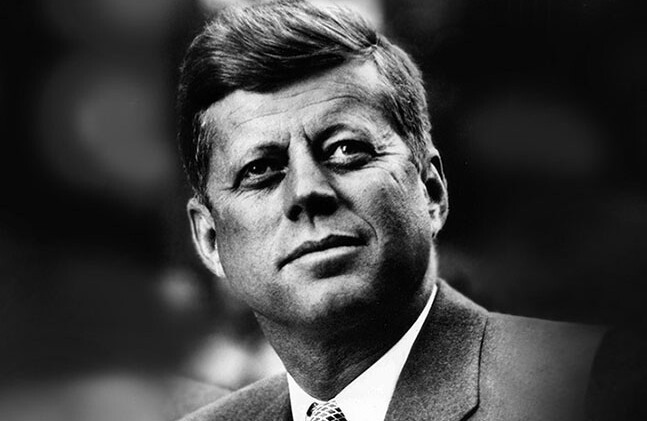
By 1960, Fidel Castro had established Cuba as a one-party communist state after overthrowing the government. Out of concern for the global spread of communism, President Eisenhower approved a CIA plan, led by Allen Dulles, for an invasion on Cuba's southern coast intended to incite a revolt against Castro. The decision to proceed ultimately fell to President Kennedy, and his choice resulted in one of the most significant foreign policy failures in American history--the defining example of Groupthink. Despite days of discussion with approximately 40 advisors, the disastrous outcome prompted observers to question how such a poor decision could have been made.
The approved plan involved around 1,400 CIA-trained Cuban exiles in Guatemala storming the beach at Bahía de Cochinos with American weapons, expecting the Cuban populace to rise up and ensure an American victory against communism.
However, crucial support was withdrawn at the last moment.
The 1,400 exiles were met by a vastly superior Cuban force of 20,000 soldiers. The promised American air and naval support never materialized, leaving the exiles without ammunition or a retreat path. Over 1,200 were captured and the rest were killed. The invasion ended in three days, humiliating Kennedy on the global stage, elevating Castro's status, and intensifying the Cold War by strengthening the Cuban-Russian alliance.
Kennedy later reflected, "How could we have been so stupid?"
"How could we have been so stupid?"
Janis conducted years of research to understand this monumental error, resulting in his book that proposed "Groupthink" as the undiagnosed problem afflicting decision-making groups. He argued that this process problem, often unnoticed, warps a group's perception of reality and leads to reckless decisions. In the case of the Bay of Pigs, Janis found that Kennedy's advisors, despite having private reservations about the mission's viability, failed to voice their concerns.

According to advisor Arthur Schlesinger Jr., the senior officials were unanimous, and he believed a single opposing voice would have been enough for Kennedy to cancel the operation. Janis concluded that Groupthink also contributed to other foreign policy disasters, including the failure to heed warnings before the Pearl Harbor attack in 1941, the decision to cross the 38th parallel into North Korea in 1950, and the escalation of American involvement in the Vietnam War in the late 1960s.
In 2016, the Central Intelligence Agency published its Diversity in Leadership Study (DLS) to investigate diversity’s indirect link to the risk of Groupthink.
Director John Brennan publicly connected a lack of diversity to greater susceptibility to Groupthink, warning that without a range of perspectives the agency could suffer intelligence failures. In response, he introduced mandatory diversity training and linked senior leaders’ performance reviews to their progress on inclusion. While the CIA has not produced a dedicated report exclusively on “Groupthink,” the DLS explicitly associates a largely white, male leadership cadre with these group-dynamic risks.
An earlier 2013 Director’s Advisory Group (DAG) on Women in Leadership, chaired by Madeleine Albright, shaped the DLS’s agenda by spotlighting gender disparities, including women holding only 31% of senior posts. Together, these studies frame diversity as operationally essential for avoiding Groupthink-like errors, including pre‑9/11 failures linked to a culturally uniform workforce.
As Groupthink emerges again, both in social, political and military spheres as well as financial markets, Janis’s 1972 book Victims of Groupthink might be pertinent.
Happy weekend reading!