
News · Rates & FX · US
Fed's Rate Increase Won't Help Outrun Inflation
Kevin Warsh had a phrase ready when reporters asked him, again, why the Federal Reserve was raising interest rates into an economy he himself described as strong. The central bank, the Fed chair said, was simply…
The Federal Reserve raised interest rates for the first time since 2023 on Sept. 16. Its chair, Kevin Warsh, says financial conditions still aren't tight, and the officials, strategists and central bankers now weighing in doubt a quarter point would rein in costs actually driving prices higher.
Kevin Warsh had a phrase ready when reporters asked him, again, why the Federal Reserve was raising interest rates into an economy he himself described as strong. The central bank, the Fed chair said, was simply "removing a dose of accommodation," a phrase carefully chosen to avoid the word tightening.
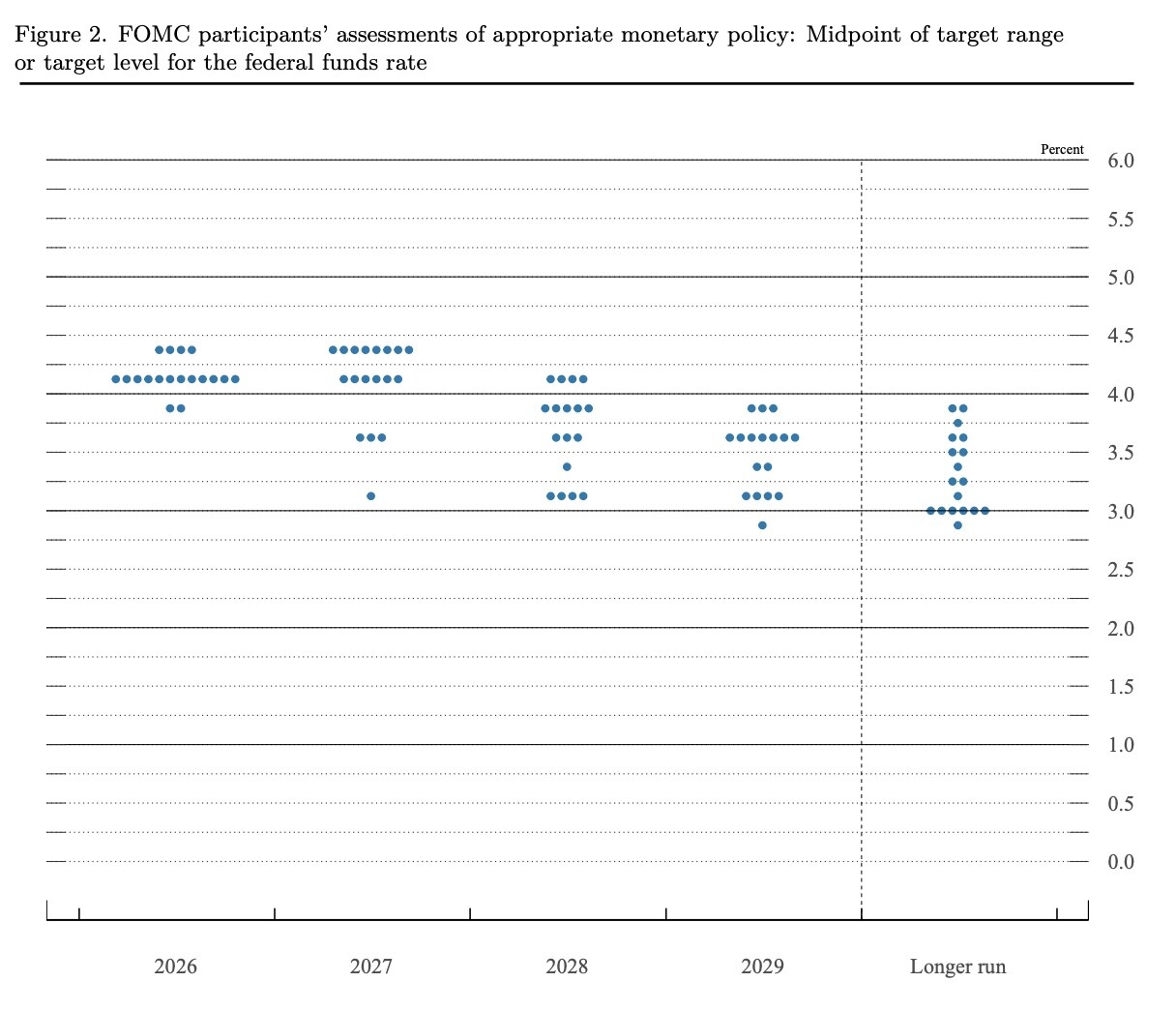
It was an odd distinction to be drawing on Sept. 16, the day the Fed lifted its benchmark rate for the first time since July 2023, moving its target range a quarter point higher, to 3.75 percent to 4 percent, in a unanimous vote. Inflation by the Fed's own preferred gauge had run at 3.7 percent in July, nearly double the central bank's target. Gasoline prices had jumped again in August. And when a reporter pressed Warsh on whether financial conditions were even tight enough to matter, he allowed that he would be "hard-pressed" to call them restrictive.
That tension was the real story of the day.
After three years on hold, the Fed was moving, but by an amount, and with a rationale, that left open the question of whether it would be enough. Whether Warsh's quarter point gets the central bank ahead of inflation over the next 12 months is not something Fed officials are willing to promise.
Sixteen of the 18 policymakers who submitted forecasts that day penciled in at least one more quarter-point increase before the year is out, and the median official does not expect inflation back at 2 percent until 2029.
The Specter of Inflation
The inflation Warsh is fighting has a particular shape.
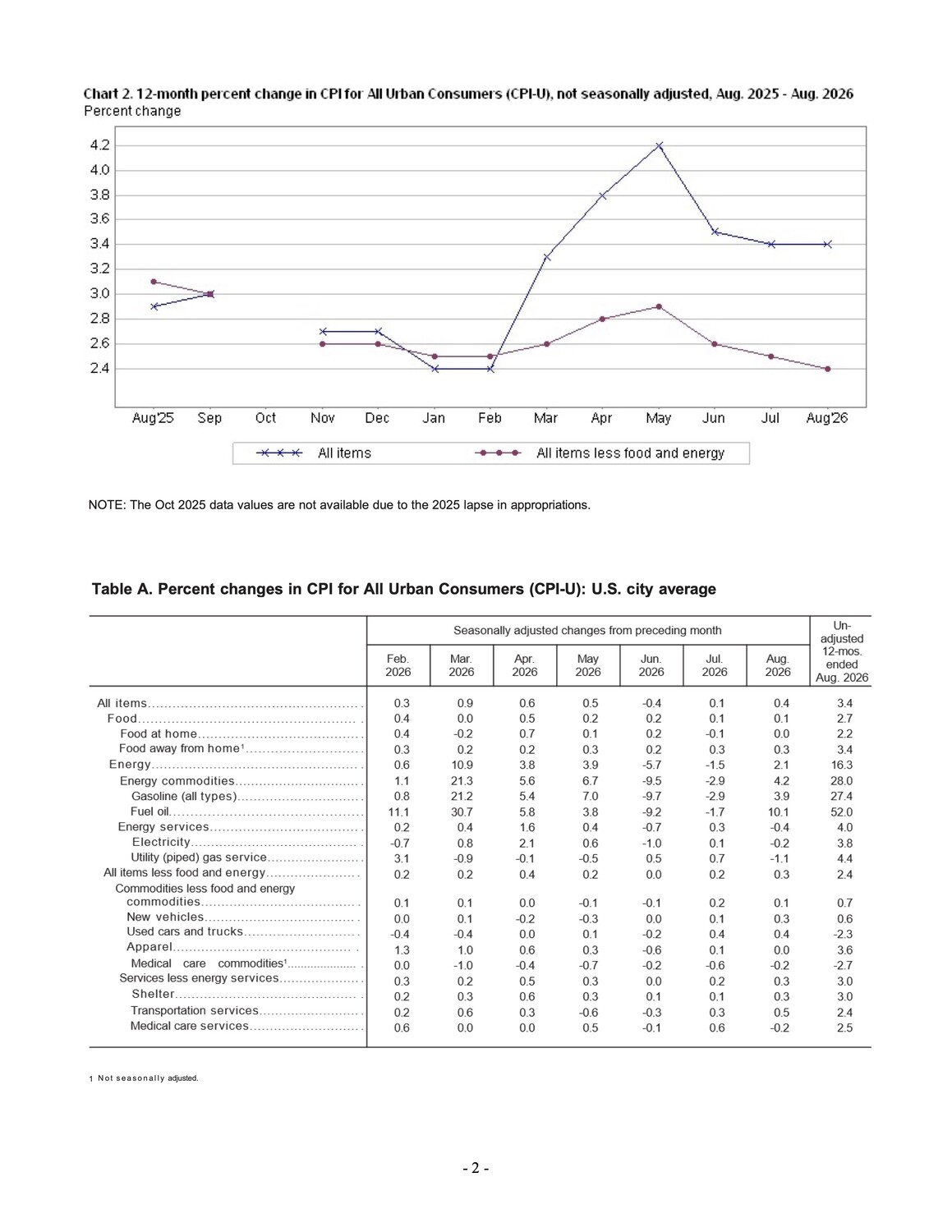
Consumer prices rose 3.4 percent in August from a year earlier, unchanged from July, but the composition told a sharper story. Gasoline prices jumped 3.9 percent for the month alone and, on the Labor Department's accounting, drove more than a third of the entire headline increase. Energy costs overall were up 16.3 percent from a year before.
Core inflation, which strips out food and energy, actually eased slightly, to 2.4 percent from 2.5 percent, evidence, Fed officials have argued, that the pressure is concentrated rather than spreading through the economy, at least for now.
The Fed's favored measure, the personal consumption expenditures price index, ran hotter. Even as real consumer spending barely moved, the PCE print came in at 3.7 percent overall in July, with a core reading of 3.3 percent.
None of that came with the kind of labor-market weakness that might otherwise argue for caution.
The August jobs report showed employers adding 162,000 positions, roughly three times what forecasters had expected, with unemployment holding at 4.1 percent and wages up 3.1 percent over the year, a pace that has not obviously accelerated into the kind of wage-price spiral the Fed fears most.
Officials pointed to that combination, a labor market with room to spare and inflation still running well above target, as their justification.
Warsh estimated, in remarks after the meeting, that August's headline personal consumption inflation would come in near 3.6 percent, with core inflation at 3.2 percent by that measure and 2.4 percent by the separate consumer price index.
"Too many categories," he said, "are still posting increases above 3 percent, on both a 6- and 12-month basis." A resilient economy gave the Fed room to act on price stability without worrying, for now, about the job market.
The logic of raising rates to fight inflation is old and, within limits, well tested.
Higher borrowing costs cool demand, a stronger dollar makes imports cheaper, and tighter financial conditions eventually show up in slower price growth. But the current problem, unlike the demand-driven surge of 2021 and 2022, has its roots in energy and tariff costs the Fed cannot touch directly.
A rate increase cannot lower the price of oil or unwind a tariff.
The Moving Goalpost
In a note reported by Yahoo Finance’s Brian Sozzi, Rick Rieder, who runs fixed income at BlackRock and was himself considered for the job Warsh now holds, argued that the categories doing the most damage right now, energy, insurance, healthcare and education, are precisely the ones least likely to respond to a change in the fed funds rate.
"Clearly, energy, insurance, healthcare, and education are facing and passing through higher costs today," Rieder wrote. "The Fed's challenge is combating that with their toolkit."
Citing San Francisco Fed research, he made the case that the parts of inflation still cooling on their own are the ones tied to demand, while the parts stuck above target are the ones that simply don't move when borrowing gets more expensive.
Landlords do not cut rent because the Fed raised rates. Hospitals do not cut prices either. Even so, Rieder concluded, sitting still was not the better option: "inaction would not be the preferred route going forward."
Inaction would not be the preferred route going forward - BlackRock Fixed-Income CIO Rick Rieder
Venu Krishna, Barclays' head of U.S. equity strategy, raised a related problem the same week, from the corporate side of the ledger rather than the household one.
Memory chip prices, pushed up by the scramble among tech companies to build out artificial intelligence data centers, are set to keep squeezing corporate profit margins well into 2027, he warned, and there is no plausible interest-rate path that changes that.
"Recent commentary from some of the largest memory buyers suggests that higher cost assumptions are starting to spill over into next year," Krishna said.
Apple has pinned all of its recent gross-margin compression on higher memory costs it expects to persist. HP told investors memory and storage will keep eating up a larger share of what it spends building its products. Samsung, which both makes memory chips and buys them, said pre-booked orders point to a wider supply gap in 2027 than this year.
The shortage runs deep in the chip supply chain. It will keep showing up in quarterly earnings no matter what the Fed does with rates.
A Double-Edged Sword
What a rate increase can do is stop a supply shock from turning into something worse--a shift in the public's underlying expectations about inflation, and in turn in the wages and prices that businesses and workers set based on those expectations.
That is the case Petar Chobanov, a deputy governor of the Bulgarian National Bank, made in a speech published by the Bank for International Settlements in February.
When supply shocks recur, he argued, central banks can no longer simply "look through" them, because doing so risks what he called "endogenous inflation persistence" once wage resistance and profit-margin protection take hold. The relevant question, he posits, is not whether a given shock originated in supply or demand, but whether wages, prices and expectations still look consistent with an eventual return to target.
When supply shocks recur, Chobanov argues, central banks can no longer simply "look through" them, because doing so risks what he called "endogenous inflation persistence" once wage resistance and profit-margin protection take hold.
By that test, the picture on Sept. 16 was mixed.
Bond-market measures of expected inflation were, if anything, reassuring. Five-year and longer-run market-based measures were both hovering in the low-to-mid 2 percent range, evidence that traders were not pricing in a lasting change in the inflation regime.
Households though are telling a different story.
The New York Fed's survey of consumers, taken in August, found one-year inflation expectations steady at 3.6 percent and five-year expectations at 3.0 percent, elevated but not moving.
The University of Michigan's preliminary September survey, released days before the Fed's decision, found something more alarming.
One-year inflation expectations had jumped to 4.6 percent, from 4.0 percent the month before, the highest reading since June, while overall consumer sentiment fell to one of its weakest levels on record.
The divergence between calm markets and anxious households is close to the whole point of raising rates in public and explaining why, to show enough resolve that the anxious version of the story does not win out.
Man on Wire
By the time the Fed voted, markets had already stopped waiting to find out what it would do.
UBS, in a note to clients on Sept. 7, raised its odds of a September increase to about 60 percent, from roughly 50 percent, after the stronger-than-expected jobs report, reversing an earlier recommendation that clients lock in bond yields before rates fell, a bet the bank no longer expects to pay off.
Treasury yields and the dollar rose in the days before the decision as oil prices climbed and expectations of a hike solidified, Reuters reported, with the 10-year Treasury yield climbing to its highest levels since 2007. UBS's revised forecast now has two-year Treasury yields reaching roughly 4.25 percent by mid-2027, a full percentage point higher than the bank was projecting only months earlier.
In effect, the quarter point was already priced into markets by the time the Fed voted, which is one reason its incremental effect on financial conditions may be smaller than the headline number suggests. The tightening that mattered most had already happened gradually, as traders spent the prior week pricing in what the Fed was about to do.
Perhaps the most telling number to come out of Sept. 16 was not the quarter point itself but the year attached to the Fed's inflation target: 2029.
That is when the median Fed official now expects inflation to reach 2 percent, a year later than the central bank was projecting as recently as June.
In the meantime, the Fed's own projections put inflation at 2.3 percent, by its preferred gauge, at the end of 2027, better but still short of target, with the policy rate held near 4.1 percent through that year, a full percentage point above the Fed's estimate of its own long-run, neutral level.
Research on how monetary policy actually moves through the economy helps explain the caution.
A 2024 analysis by the Federal Reserve Bank of San Francisco found that after a rate increase, the most responsive prices typically do not begin to show measurable downward pressure for about 18 months; broader, headline price measures take closer to two years.
Judged against that research, an increase delivered in September 2026 would be expected to show its clearest effects on inflation sometime in 2028, well outside the 12-month window that is the more immediate concern.
Judged against that research, an increase delivered in September 2026 would be expected to show its clearest effects on inflation sometime in 2028, well outside the 12-month window that is the more immediate concern.
What can plausibly happen within a year runs through faster channels such as expectations, the dollar, asset prices, the cost and availability of credit. Those move quickly, and by several of those measures, a stronger dollar, rising yields, inflation expectations that are elevated but not runaway, the September increase and the market moves that anticipated it were already doing some of that work before the vote was even taken.
Fed officials will be watching several things over the coming months to judge whether the move is working, none of them as simple as whether next month's inflation report happens to come in lower.
Three- and six-month annualized core inflation will need to fall convincingly below the 12-month rate. Services inflation outside of energy and shelter, running near 3 percent, will need to ease, evidence that the energy shock is not spreading into the broader economy. Wage growth will need to keep moderating without unemployment rising sharply from its current 4.1 percent. And household inflation expectations, particularly the jump recorded in the University of Michigan's September survey, will need to come back down rather than keep climbing.
Sixteen of 18 policymakers expect to raise rates again before the year ends, and the median official does not see the Fed's target reached until 2029.
That doesn’t necessarily mean victory.
Probably stuck between a rock and a hard place, Warsh perhaps best put it when he said financial conditions were not yet restrictive.
The quarter point announced on Sept. 16 was the beginning of an answer to whether the Fed can get ahead of this round of inflation. It was not the end of one.
The author is an Executive Director and Head of Research and Analysis at Icarus Asia an independent financial research and market analysis firm that specializes in macroeconomic insights, structural fixed-income analysis, and liquidity trends across Asian and global capital markets.
DISCLAIMER: Not investment advice. Please do your own research and consult with a registered investment advisor.
Sources
Bank for International Settlements. "Petar Chobanov: Back to Basics — Interest Rates, Price Stability and Supply Side Shocks." Speech, Feb. 18, 2026.
Board of Governors of the Federal Reserve System. "Federal Reserve Issues FOMC Statement." Press release, Sept. 16, 2026.
Board of Governors of the Federal Reserve System. "September 16, 2026: FOMC Projections Materials, Accessible Version." Sept. 16, 2026.
Board of Governors of the Federal Reserve System. "Transcript of Chair Warsh's Press Conference Opening Remarks." Sept. 16, 2026.
Bureau of Economic Analysis. "Personal Income and Outlays, July 2026." Aug. 2026.
Bureau of Labor Statistics. "The Employment Situation — August 2026." Sept. 2026.
Federal Reserve Bank of New York. "Medium-Term Inflation Expectations Tick Down; Unemployment Expectations Deteriorate." Survey of Consumer Expectations, Sept. 8, 2026.
Federal Reserve Bank of San Francisco. "How Quickly Do Prices Respond to Monetary Policy?" Economic Letter, April 2024.
Reuters. "Dollar Near Two-Week High as Oil Surge Lifts Yields, Fed Hike Bets." Sept. 15, 2026.
Reuters. "Fed Hikes Rates in Search of 'Timelier' Drop in Inflation, Sees More Tightening Ahead." Sept. 16, 2026.
Sozzi, Brian. "Top Strategist Thinks the Federal Reserve Interest Rate Hike Won't Fix This Huge Earnings Risk." Yahoo Finance, Sept. 17, 2026.
Sozzi, Brian. "Why This Former Contender for the Fed Chair Job Thinks Kevin Warsh Has a Huge Problem on His Hands." Yahoo Finance, Sept. 17, 2026.
UBS Chief Investment Office. "Strong US Jobs Data Likely to Tip the Balance for the Fed." Sept. 7, 2026.
University of Michigan. Surveys of Consumers, preliminary September 2026 results, reported in "Preliminary: Consumer Sentiment Decreased 3.9 Points in September," ABA Banking Journal. Sept. 2026.
Yahoo Finance. "Fed Raises Interest Rates by a Quarter Point in Unanimous Decision, Marking First Hike in 3 Years." Sept. 16, 2026.